
Sutjeska National Park is the oldest national park in Bosnia and Herzegovina and one of the wildest mountain areas in the Balkans. It’s not a commercial park with paved viewpoints and tourist buses. It’s a place of high peaks, deep forests, glacial lakes and real mountain terrain.
If you’re planning a visit, here are the best things to do inside Sutjeska National Park.
At 2,386 metres, Maglić is the highest peak in the country and the dominant mountain of the park.
Most hikers start from Prijevor. The ascent takes 6–8 hours round trip depending on pace. The final ridge is exposed in sections and includes short secured parts, but in dry conditions it’s manageable for fit hikers.
From the summit, you get wide views across Montenegro and the surrounding Dinaric mountains. It’s the most complete mountain experience inside the park.
Perućica is one of the last remaining primeval forests in Europe. Entry into the forest itself requires a licensed guide and special permission.
Most visitors explore it from official viewpoints above the canyon, where you can see dense untouched forest stretching across the valley and the 75-metre Skakavac waterfall.
It’s one of the most protected and ecologically valuable areas in the country.
The western part of the park includes Zelengora mountain, known for its “mountain eyes” — glacial lakes scattered across wide alpine plateaus.
Orlovačko Lake is the easiest to access, while others require longer hikes. Compared to the rocky terrain of Maglić, Zelengora offers softer landscapes and open walking routes.
It’s ideal for moderate hiking and multi-day trekking.
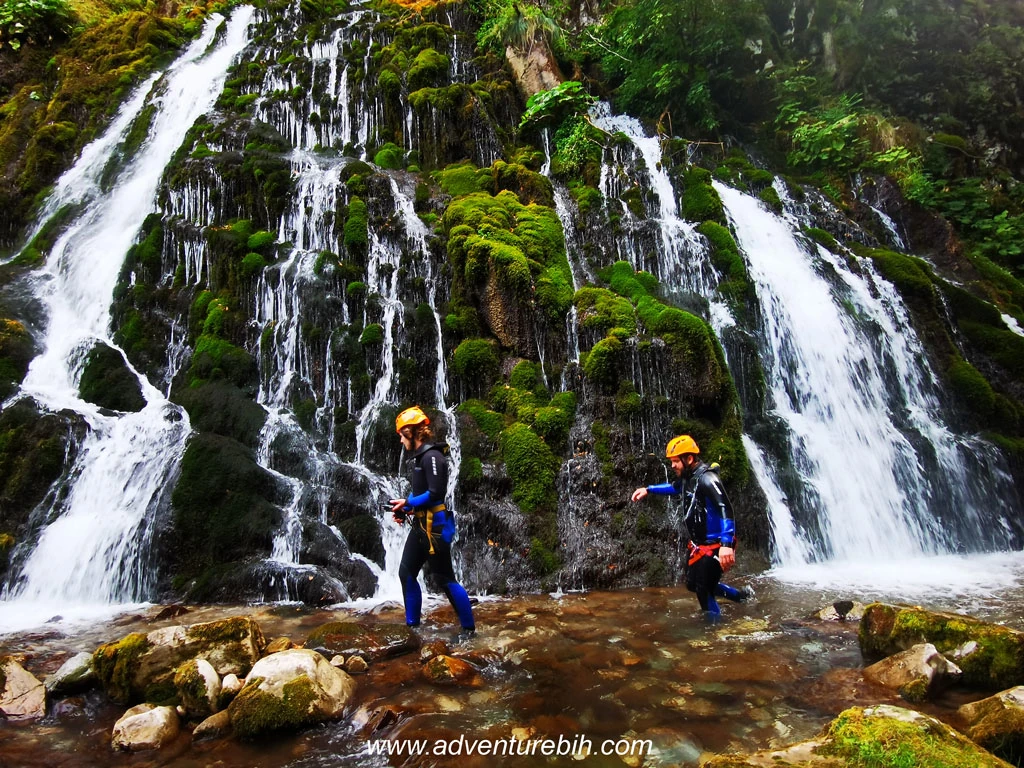
Hrcavka Canyon is located within the wider Sutjeska area and offers one of the most adventurous activities connected to the park.
The route includes swimming, scrambling and rappelling through narrow rock corridors. It requires proper equipment and an experienced guide, but for active visitors it’s one of the most dynamic ways to experience the landscape.
Near the main entrance of the park, the Tjentište memorial complex commemorates the Battle of Sutjeska (1943).
The large concrete monument and memorial house are important historical landmarks and add cultural depth to the natural setting of the park.
Sutjeska is well suited for longer hikes. Routes across Zelengora and around Maglić allow multi-day trekking with mountain shelters along the way.
Preparation is important — weather can change quickly and facilities are limited compared to alpine regions in Western Europe.
Late May to October is the main season. June and September often offer the most comfortable temperatures and fewer visitors.
Higher peaks may still hold snow in early summer.
Sutjeska National Park is not built for fast tourism. It rewards those who are willing to hike, explore and spend time in nature.
From the highest peak in Bosnia to one of Europe’s last primeval forests, it remains one of the most authentic mountain areas in the region.